
FACULTY OF CIVIL ENGINEERING
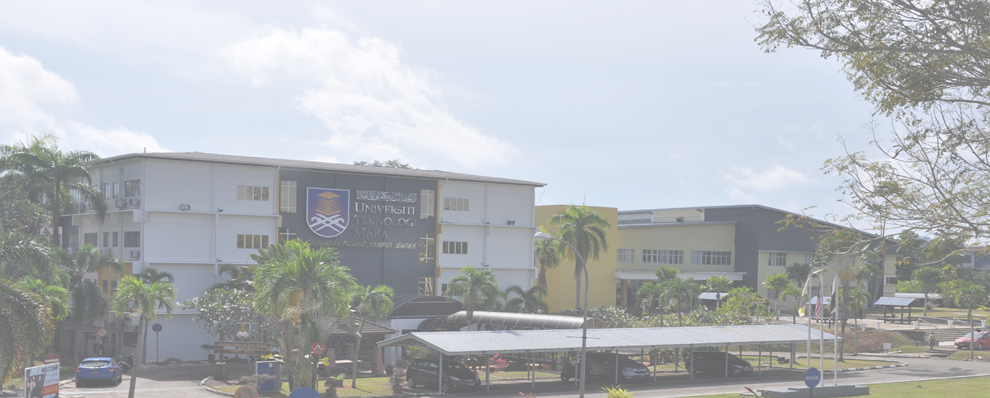
Fakulti Kejuruteraan Awam
Kejuruteraan Awam ialah profesion mencabar yang mementingkan teknik dan prosedur di mana bangunan tinggi, lapangan terbang, pelabuhan, jambatan, empangan, takungan, bekalan air dan sistem pelupusan kumbahan, sistem pengangkutan dan struktur lain direka bentuk, ditinjau, dibina dan diselenggara. Seorang jurutera awam harus dilengkapi dengan pengetahuan dan pengetahuan mengurus projek dengan berkesan dalam persekitaran yang selamat.
Fakulti Kejuruteraan Awam mula beroperasi di UiTM Cawangan Pahang pada Disember 1999. Seterusnya, Fakulti Kejuruteraan Awam dikenali sebagai Pengajian Kejuruteraan Awam pada 1 November 2021. Pengajian Kejuruteraan Awam UiTM Cawangan Pahang menawarkan program Diploma Kejuruteraan Awam (CEEC110/EC110). Menjelang Oktober 2022, Pengajian Kejuruteraan Awam mempunyai kira-kira 440 pelajar yang menuntut di UiTM Cawangan Pahang.
Berkuat kuasa pada 1 Mei 2025, entiti ini telah dinamakan semula sebagai Fakulti Kejuruteraan Awam. Pada masa kini, Fakulti Kejuruteraan Awam UiTM Cawangan Pahang menawarkan dua program utama, iaitu Diploma Kejuruteraan Awam (CEEC110/EC110) dan Sarjana Muda Teknologi Kejuruteraan Awam (Pembinaan) Dengan Kepujian (EC224), bagi menyediakan laluan pendidikan kejuruteraan awam yang lebih menyeluruh kepada para pelajar.
E-mel 2: rohaya_alias@uitm.edu.my
Menawarkan program akademik bertaraf profesional dalam bidang kejuruteraan awam bagi melahirkan graduan berkemahiran tinggi dan berdaya saing.
Fakulti Kejuruteraan Awam terdiri daripada empat kajian iaitu:-
• Kejuruteraan Struktur dan Bahan (STRUCM)
• Kejuruteraan Geoteknik dan Pengangkutan (GEOTREN)
• Sumber Air dan Sistem Alam Sekitar (WRES)
• Perniagaan Pembinaan dan Pengurusan Projek (CBPM)
To lead the development of agile, professional bumiputeras through state-of-the-art curricula and impactful research
- To expedite accessibility to higher education
- To provide world-class education
- To offer competitive academic programmes that fulfil market needs, spearhead national development and promote global prosperity
- To produce well-balanced, entrepreneurial graduates who are globally competent
- To strengthen the internationalisation of values via enhancement programmes
- To sustain organisational excellence through effective and efficient governance
- To champion impactful research through stronger research ecosystem
- To strengthen strategic alliance with alumni and industries
- To provide cutting edge ecosystem conducive for academic advancements
- To regulate cost-effective financial practices towards organisational sustainability
- Menyediakan persekitaran pembelajaran yang selamat, kondusif dan holistik.
- Menyampaikan respons akademik dan pentadbiran secara profesional dan cekap.
- Memastikan kualiti pengajaran dan pembelajaran menepati piawaian kebangsaan dan antarabangsa.
- Memperkukuh rangkaian strategik dengan industri, agensi dan komuniti.
- Memupuk budaya penyelidikan dan inovasi yang menyumbang kepada pembangunan negara.

PROGRAMMES OFFERED
Diploma
Bachelor's Degree
Master's Degree or Ph.D
EC110 - DIPLOMA IN CIVIL ENGINEERING
Programme Educational Objective (PEO)
Demonstrate the civil engineering knowledge, competency and practical skills, including digital technology and numerical skills necessary for addressing operational and maintenance challenges in related industries.
Demonstrate effective communication and interpersonal skills when leading or working with various stakeholders in diverse engineering settings with an awareness of sustainable development principles.
Demonstrate personal skills that emphasise professionalism and ethics in carrying out their duties in all engineering settings and having an entrepreneurial mindset for successful societal and career development.
Programme Outcomes (PO)
Identify and analyse well-defined civil engineering problems in reaching substantiated conclusions using codified methods of analysis specific to their field of activity.
(DK1 to DK4)
Design solutions for solving well-defined technical civil engineering problems and assist with the design of systems, components or processes to meet specified needs with appropriate consideration for public health and safety as well as cultural, societal, and environmental considerations as required (DK5)
Conduct investigations of well-defined civil engineering problems; classify, locate and search relevant codes and catalogues and conduct standard tests and measurements (DK8)
Apply/Perform while recognising limitations of appropriate techniques, resources, and modern computing, engineering, and IT tools for well-defined civil engineering problems. (DK2 and DK6)
Consider sustainable development impacts to society, the economy, sustainability, health and safety, legal frameworks, and the environment in solving well-defined civil engineering problems. (DK1, DK5 and DK7)
Commit to professional ethics and responsibilities, and norms of technician practices, including compliance with national and international laws, while accepting diversity and inclusion (DK9)
Demonstrate as an efficient individual and as a member or leader in diverse and inclusive teams and in multi-disciplinary, face-to-face, remote and distributed settings (DK9)
Demonstrate effective and inclusive communication on well-defined engineering activities with the engineering community and with society at large by being able to comprehend the work of others, document their work, and give and receive clear instructions.
Demonstrate awareness of engineering management principles while assuming responsibility as a member or leader in a technical team and managing projects in multidisciplinary environments
Recognise and accept the need for, and have the ability, adaptability and flexibility for i) independent and life-long learning and ii) critical thinking in the face of specialised technical knowledge; (DK8)
EC224 - BACHELOR OF CIVIL ENGINEERING TECHNOLOGY (CONSTRUCTION) WITH HONOURS.
Programme Educational Objective (PEO)
Demonstrate a wide range level of knowledge and practical skills in civil engineering technology, including digital and numeracy abilities, contributing effectively to the management and execution of industry-standard projects. (Cluster 1,2 & 3)
*Note:
- Cluster 1:Knowledge & understanding
- Cluster 2:Cognitive Skills
- Cluster 3:Functional work skills focus on; practical skills, interpersonal and communication skills, digital and numeracy skills, leadership, autonomy and responsibility.
Demonstrate good communication and interpersonal relationships while resolving technical and non-technical challenges, with consideration for sustainable practices and accommodating their impact on society and the environment. (Cluster 3)
*Note:
Cluster 3:Functional work skills focus on; practical skills, interpersonal and communication skills, digital and numeracy skills, leadership, autonomy and responsibility.
Demonstrate personal skills that emphasise flexibility and adaptability as well as lifelong learning and entrepreneurial mindset with ethics alongside professionalism for successful societal and career development. (Cluster 4 & 5)
*Notes:
- Cluster 4:personal and entrepreneurial skills
- Cluster 5:Ethics and professionalism
Programme Outcomes (PO)
Engineering Knowledge: Apply knowledge of mathematics, natural science, computing and engineering fundamentals and an engineering specialization as specified in SK1 to SK4, respectively, to analyse broadly- defined problems related to civil engineering technology procedures, processes, systems or methodologies.
Problem Analysis: Identify, assess, research literature, and analyse and formulate broadly-defined civil engineering technology problems reaching substantiated conclusions using analytical tools appropriate to the discipline or area of specialization with considerations for sustainable development. (SK1 to SK4)
*Represented by the 17 UN Sustainable Development Goals(UN-SDG)
Design/development of solutions: Design solutions for broadly-defined civil engineering technology problems and contribute to the design of systems, components or processes to meet identified needs with appropriate consideration for public health and safety, whole-life cost, net zero carbon as well as resource, cultural, societal, and environmental considerations as required. (SK5)
Investigation: Conduct investigations of broadly-defined civil engineering technology problems; locate, search and select relevant data from codes, databases and literature, design and conduct experiments to provide valid conclusions. (SK8)
Tool Usage: Select and apply/perform while recognising limitations of appropriate techniques, resources, and modern engineering and IT tools, including prediction and modelling, to broadly-defined civil engineering technology problems. (SK2 and SK6)
Consider sustainable development impacts to society, the economy, sustainability, health and safety, legal frameworks, and the environment in solving well-defined civil engineering problems. (DK1, DK5 and DK7)
Ethics: Understand, apply and evaluate ethical principles and commit to professional ethics and norms of multi-discipline engineering technology practice and adhere to relevant national and international laws, while adopting diversity and inclusion. (SK9)
Individual and Collaborative Teamwork: Function effectively as an individual, and as a member or leader in diverse and inclusive teams and in multi-disciplinary, face-to-face, remote and distributed settings. (SK9) |
Communication: Assume responsibility to communicate effectively and inclusively on broadly-defined engineering activities with the engineering community and with society at large, by being able to comprehend and write effective reports and design documentation, make effective presentations, taking into account cultural, language, and learning differences
Project Management and Finance: Apply knowledge of engineering management principles and economic decision-making and analyse relevant situation; while showing commitment (A3) a member and leader in a team and managing projects in one’s own work and in multidisciplinary environments.
Lifelong learning: Recognise and elucidate the need for, and have the ability, adaptability and flexibility for i) independent and life-long learning and ii) critical thinking in the face of new specialist technologies. (SK8) |
STATISTIK STAF
STATISTIK PELAJAR
 |
TIDAK DIBENARKAN menggunakan maklumat ini untuk tujuan pengiklanan, pemasaran dan penjualan produk dan perkhidmatan serta menyebar maklumat pegawai tanpa kebenaran |